Dug into the tuff
- Walls and ceiling are the rock itself.
- Cool in summer, holds the heat in winter.
- Small windows, thick silence.
Cappadocia › What is a cave hotel
A hotel whose rooms are cut into the soft volcanic rock of Cappadocia, or built with it against the cliff. The difference matters for light, temperature and price, so we label it on every hotel.
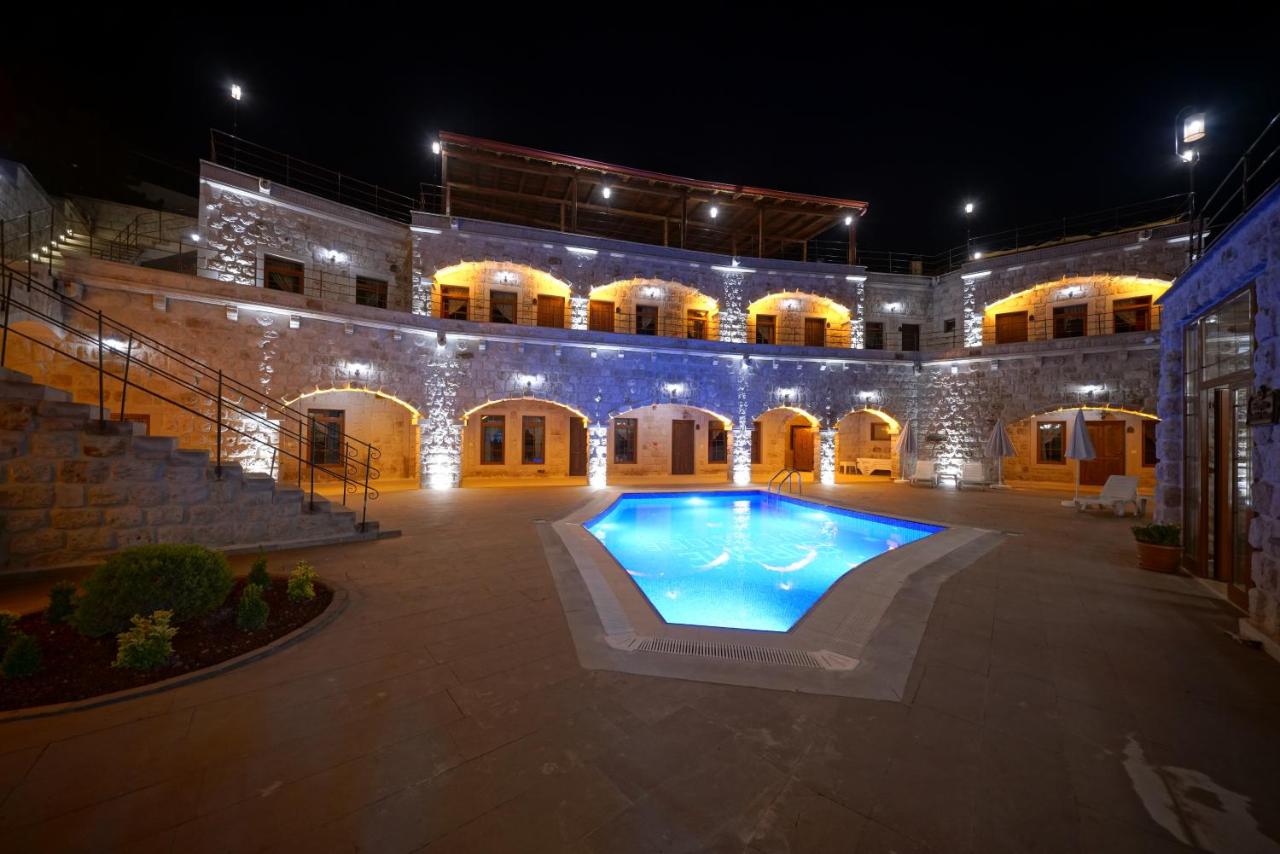 A carved room: Göreme Cave Lodge
What is a cave hotel? In Cappadocia, it is a hotel whose rooms are carved into the soft volcanic rock, or built in stone in the style of the old cave houses. Many occupy dwellings, storerooms or stables that families used for generations, restored with modern bathrooms, heating and comfortable beds.
The result is a room with thick walls, curved ceilings and a quiet that ordinary hotels rarely have. In our May 2027 survey of Booking.com listings, we kept 188 well-rated cave hotels, and 119 of them have rooms the listing explicitly describes as carved.
A cave hotel is not camping in a cave. The well-rated ones have proper beds, private bathrooms, heating, Wi-Fi and breakfast, often served on a terrace. What sets them apart is the setting: rock walls, irregular shapes, stone floors and rugs, and the quiet that comes with thick stone.
Furnishings are usually simple and local in style, with wooden furniture, kilims and soft lighting set into wall niches. Some suites add a jacuzzi, a fireplace or a private terrace.
Bathrooms are often the most modern part of the room, sometimes carved into the rock themselves, with walk-in showers and stone basins. Size varies more than in ordinary hotels, so check the photos of the exact category.
A carved room is cut directly into the tuff. Walls and ceiling are bare or lightly plastered rock, and the shape follows the original cavity, so no two rooms are quite the same. Niches cut into the walls often serve as shelves or bedside tables.
A stone-built room is constructed from cut blocks of the same stone, usually with a vaulted or arched ceiling. It is more regular in shape, often larger, and easier to fit with wide windows. Many hotels combine both: carved rooms at the back of the rock, stone rooms and terraces at the front.
So what is a cave hotel, if not every room is carved? In practice, it is a hotel built into or against the rock, keeping the forms of the old cave houses, whatever the mix of rooms. We show the "Carved room" label only when the listing says rooms are carved. A hotel called a cave hotel with stone-built rooms keeps its place on the site without the label.
Thick rock walls slow down changes in temperature. Carved rooms stay cool in summer, often without air conditioning, and hold heat in winter once the heating is on. They can feel cool on arrival in spring and autumn, so a hotel with good heating is worth checking for.
Carved rooms usually have windows only in the front wall, and some at the back of the rock have none. Light is soft and the room stays dark in the morning, which helps after a late night but not for early risers who like daylight. Stone-built rooms are generally brighter.
Rooms set at the front of the rock, with a door and windows onto a terrace, offer a good balance: the cool and character of the rock inside, daylight at the entrance. Photos taken in daylight with the curtains open show what to expect.
Rock can hold some moisture, particularly in older rooms or after wet weather. Well-run hotels ventilate and heat their rooms properly. Guest reviews are the best guide: look for any mention of damp or a musty smell.
Rock absorbs noise from outside, so carved rooms are usually very quiet, even in the centre of Göreme. Inside, hard surfaces can carry sound, and rooms opening onto a shared courtyard or terrace may hear footsteps early on balloon mornings.
The landscape of Cappadocia is volcanic tuff, a soft rock that is easy to carve. For centuries, people cut homes, churches, dovecotes and storerooms into the cliffs and rock cones.
Dovecotes collected pigeon droppings used to fertilise fields and vineyards. Churches and monastic rooms, many with painted interiors, can still be visited, notably at the Open-Air Museum near Göreme. Göreme National Park and the Rock Sites of Cappadocia were listed as a UNESCO World Heritage site in 1985.
In many villages, people lived partly in the rock until fairly recently, with carved rooms used as kitchens, stables or cellars behind built house fronts. Walking through Göreme, Uçhisar or Ortahisar, you can still see doorways and windows cut into the cliffs above the streets.
Today’s cave hotels continue this use of the rock, turning former homes and storerooms into rooms for travellers. Our Goreme cave hotel guide covers the village where this is most visible.
A cave hotel suits travellers who value character, quiet and a sense of place over a uniform room. It suits summer stays especially well, thanks to the natural cool. It suits less well those who need a lift, step-free access or a bright room with large windows.
Couples are the most common guests, but many hotels have family rooms or connecting rooms, sometimes on several levels linked by stone stairs. Families with small children should check the layout, as steps, terraces and low walls are part of the charm.
Read the room description, not just the hotel name, and look for "carved" or "cave room". Check the photos for rock ceilings and the number of windows. Look at recent reviews for stairs, heating and damp, and ask the hotel which room you will be given if the details matter.
Remember that one hotel can offer carved rooms, stone-built rooms and modern rooms side by side, at different prices. The cheapest category is not always the most authentic, and the most expensive is not always carved.
To compare rooms and prices, start with our Cappadocia cave hotel guide. To choose a village, read where to stay in Cappadocia. For views of the morning flights, see Cappadocia hotels with balloon view, and for any question, our contact page.
Not in a well-heated hotel. Carved rooms hold heat in winter and stay cool in summer.
Most have windows in the front wall. Some rooms at the back of the rock have little or no daylight.
Well-run hotels ventilate and heat their rooms. Recent guest reviews are the best way to check.
The rooms are not. Many hotels occupy old dwellings and storerooms carved into the rock over centuries.
Most well-rated ones do, often with showers set into the rock. Check the photos for the room you book.